My child has plagiocephaly, what can I do?
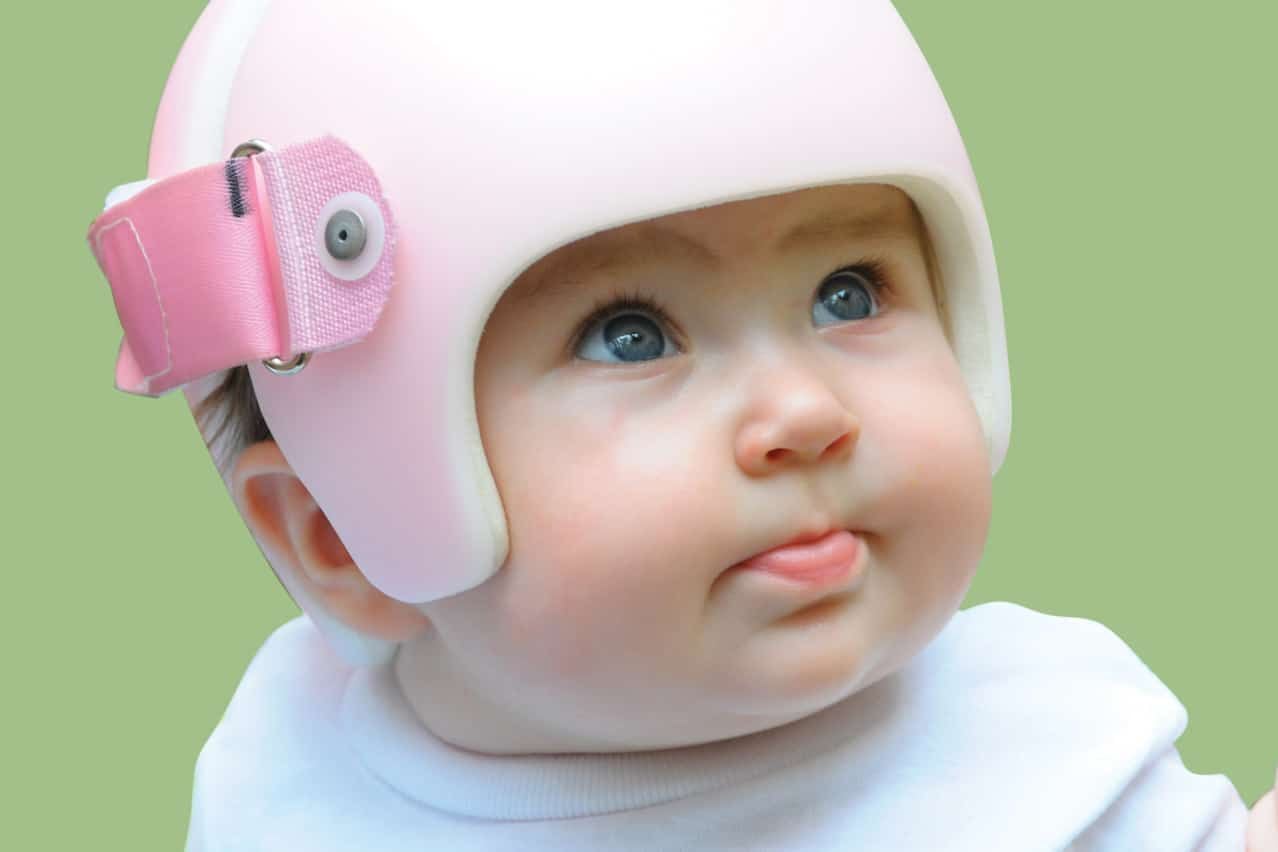
It is very important to keep in mind that plagiocephaly rarely affects normal brain development; it is mostly a cosmetic concern. At the same time, cosmetics is important today. Many parents tend to feel guilty if they do not try to correct the flat spot, "I don't want my child to say that we didn't do anything for the flat spot when they are 18 years old".
It is very important to discuss the different options. Getting information about counter-positioning and helmet therapy is the first step for parents to help them decide what options are available for their child with plagiocephaly.
Next time, we will discuss counter-positioning and helmet therapy.
Please contact us for more information on plagiocephaly and infant hemets
| Posted in:PlagiocephalyHelmets |
What is Plagiocephaly?
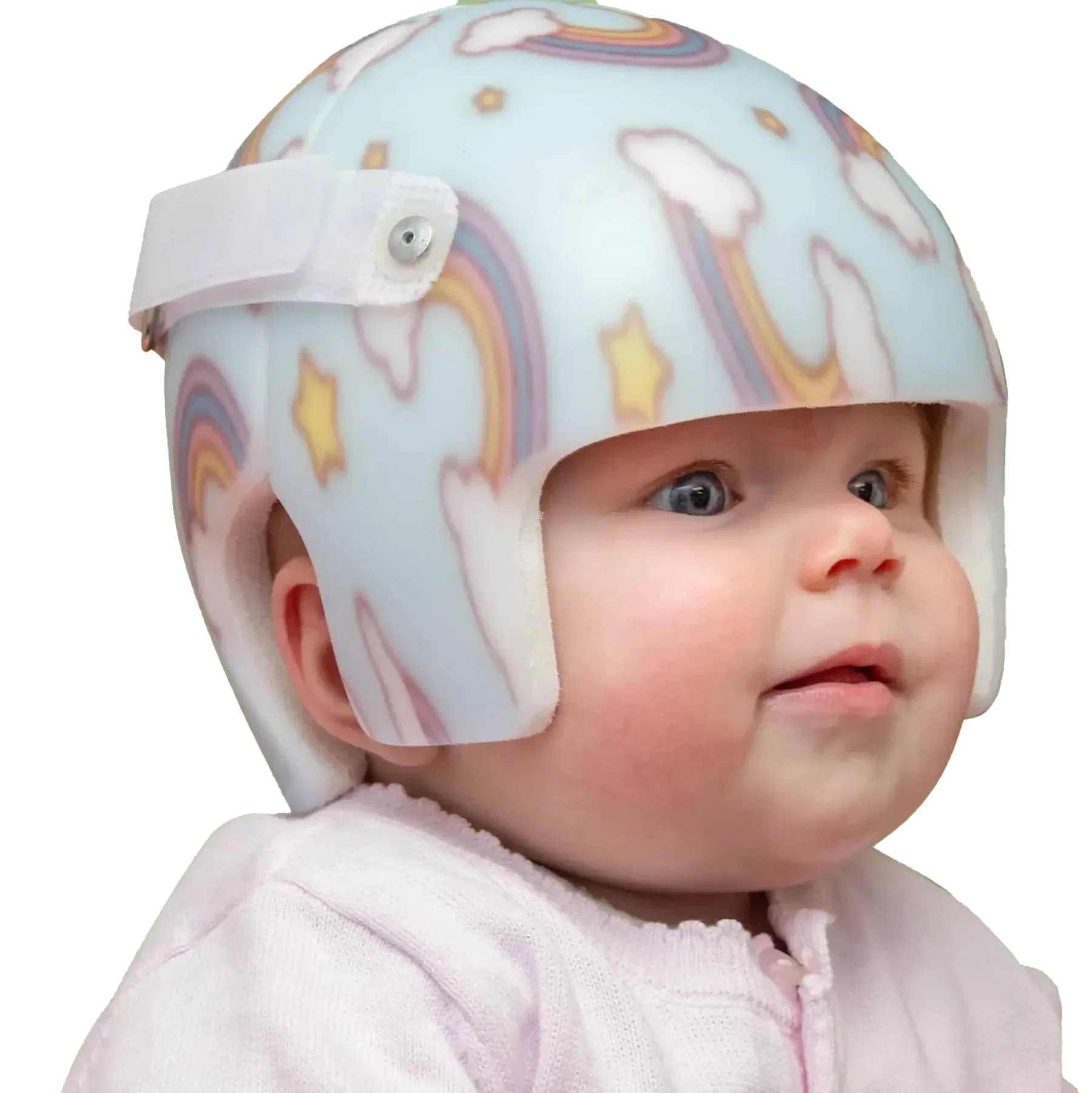
Baby flat head, better known as plagiocephaly, is characterized by a flattened area of the head in an infant.
In 1992, the American Academy of Pediatrics began the 'Back to Sleep Campaign' to help reduce Sudden Infant Death Syndrome (SIDS).
Since the inception of the program, there has been a reduction in SIDS by approximately 40%.
Because infants have been encouraged to sleep on their backs, there has been a significant increase in babies with flat spots.
Counter-positioning and helmeting are two avenues used to help reshape the flattened area.
Some of the common causes of a baby's flat head include:
- Sleeping in one position from birth through the first few months can change the head shape.
- Torticollis can be defined as the bending of the neck to one side and rotation in the opposite direction. This results in the infant sleeping constantly in one position, thus possibly resulting in a flat spot. Therapy, which includes stretching the sternocleidomastoid muscle, will help restore proper neck movements.
- Limited space in the womb may result in a flat spot before birth. Torticollis can also occur in the womb due to positioning. A baby's flat head and torticollis can also occur during the birthing process. In this case, there may be trauma as the baby moves through the birthing canal.
Counter-positioning
Counter-positioning: Placing your baby on the part of the head that is not flat is the first line of defence to help reshape the head. If started early enough, the mild flat spot may correct itself since the head is growing. The best time to start counter-positioning is before 5 months of age, since the baby hasn't developed the muscle strength to override pads/towels, etc.
It is very important to use counter-positioning techniques when the baby is sleeping or lying on their back. Always avoid the baby sleeping on its stomach. Some will use a rolled-up towel to tilt the baby at a 45-degree angle to avoid contact on the flat spot. Placing toys on the opposite side of the crib to encourage turning away from the flat spot is also effective when the baby is awake. Speak to your pediatrician about these counter-positioning techniques.
Try also to make sure that your baby does not spend too much time in a baby car seat. In this situation, your baby may still favour lying on the flat spot for long periods of time.
Supervised tummy time a few times a day is another way of keeping your baby off the flat spot. It is also very important in helping the baby interact and gain neck and shoulder muscle strength. It will not be their favorite position at first, but with time, they will like it.
Check with your physician/pediatrician to see if torticollis is also present. This could contribute to plagiocephaly and should be addressed right away. Torticollis will be addressed in a future blog.
Counter-positioning can be a very useful technique to reshape the head of a baby with mild plagiocephaly. Results can be seen within a month or so if the techniques are followed. If counter-positioning is not effective, helmeting would be another option.
Helmet for Plagiocephaly
The use of a helmet for plagiocephaly is another effective way to reshape the head if counter-positioning has not been successful. Usually, for mild plagiocephaly, counter-positioning is a viable option and should be tried first if a child is 3 to 6 months of age. If head shape does not improve, then a helmet is another option. The optimal time to start helmeting is between 5 and 6 months of age.
For moderate to severe plagiocephaly, helmet use may be the first option, especially if the client is 6-10 months of age. Time is of the essence since head growth has such a short window (80% is grown in the first year). It is during growth that the head shape can be influenced.
Remember, every child is different, so these are just basic guidelines. See your orthotist, family doctor, or physiotherapist regularly to monitor the progress of the head shape.
Please contact us for more information on plagiocephaly and infant hemets
| Posted in:PlagiocephalyHelmets |
Casting Versus Bracing
When an accident happens, and the unfortunate result is a fracture or break of a bone in the hand, the past direction has always been to have it casted after seeing a doctor and confirming it with an X-ray. New technology has brought us a long way to allow us comfort, function, and support with these types of injuries.
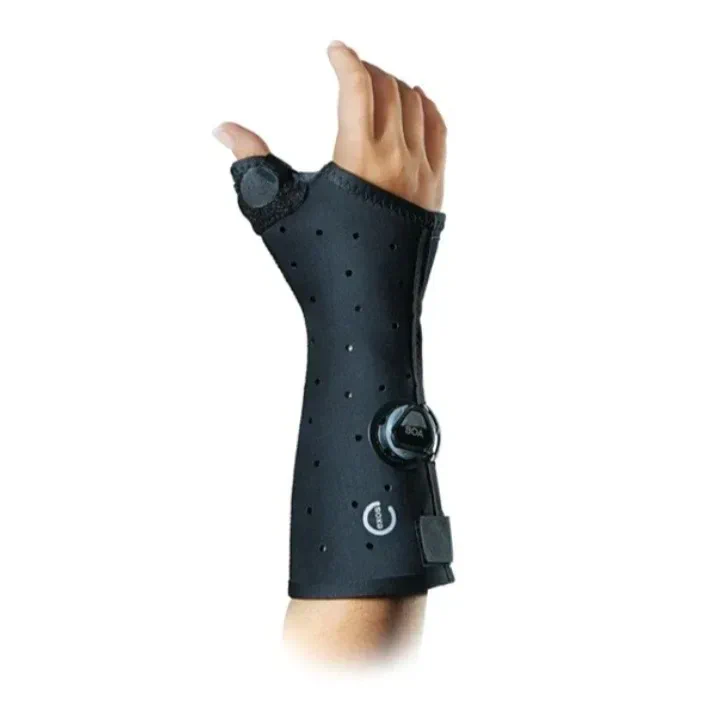
The EXOS family of wrist and thumb Spica splints is a nice alternative to casting. They offer adaptability in cases of atrophy or swelling. The unique Boa fit system accommodates these volume changes. The brace can be removed for cleaning, unlike a fracture cast.
Why not have our trained staff consult with you if you are looking for an alternative to the traditional hand, wrist, and arm cast?
| Posted in:BraceCastHand BraceWrist BraceArm brace |
Shoulder Immobilizer
This supportive device is an important tool in the recovery and rehabilitation of any successful shoulder surgery.
At Orthobility bracing, we carry various brands of immobilizers from Donjoy to Coreflex and many more top brands recommended by surgeons. The client is responsible for bringing the brace with them on the day of the surgery. The immobilizer is mandatory to have before the patient gets released after their surgery is completed.
Each patient who purchases and gets sized for an immobilizer should know how to correctly put the brace on and take it off, so they can do it themselves when the time comes.

The brace is recommended to be worn for 4-6 weeks post-surgery, 23 hours a day. The brace can be removed for short periods throughout the day for bathing and some simple exercises approved by the surgeon.
Sleeping while wearing the brace is included in the daily time frame and can be tricky. Most clients often find sleeping in a seated or semi-reclined position the most comfortable.
Cold therapy is recommended to reduce swelling and should be applied for 15 minutes every few hours for the first week, in combination with the immobilizer. As swelling becomes less prominent, the number of times cold therapy needs to be applied is reduced.
About 2 weeks after surgery, a follow-up appointment is required with the surgeon. Physiotherapy is usually recommended at this point to complete the full recovery from the surgery.
Please call us at Orthobility Bracing to answer any questions, book an appointment for sizing an immobilizer, or ask about anything else related to a shoulder injury. We can help. 289-724-1956
Please call us at 289-724-1956
| Posted in:shoulder bracingshoulder immobilizer |
New Video Series: Life as a Teen with Scoliosis, Daniela's Story
Life as a Teen with Scoliosis: Daniela's Introductory Video
"My name is Daniela, and this is my first video where I'll share my experiences with scoliosis and my journey, what you can do, with a note on positivity, how I feel, and what I think. Know that you are not alone; there are people here for you. In this video, I'm sharing my first experience in wearing the scoliosis brace, how it feels, and how to deal with it."
Daniela was diagnosed with scoliosis and would like to share her experience and thoughts with others like her. She is willing to answer your questions. Click on the button below:
| Posted in:ScoliosisDanielaTeen |